
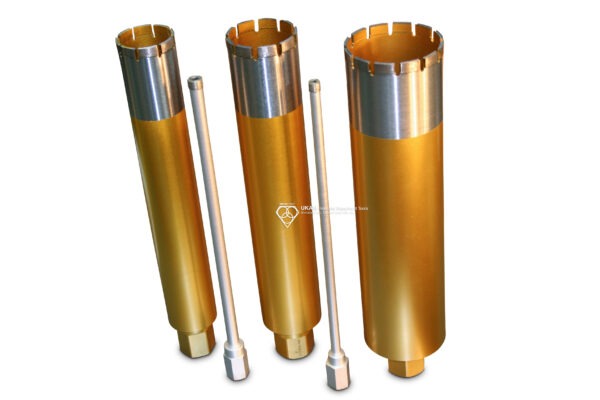
In the world of photonics and optics, where every micron matters, precision and consistency define success. Among the many specialized tools that enable this accuracy, diamond core drills stand out as indispensable instruments. Designed to deliver clean, accurate, and chip-free holes in hard and brittle materials, they have become a cornerstone for industries that work with glass, sapphire, ceramics, and advanced composites.
The Role of Diamond Core Drills in Photonics
Photonics involves the science and application of light — everything from lasers and optical lenses to sensors and fiber optic systems. The materials used in these applications are often extremely hard and delicate, requiring specialized tools for cutting, drilling, and shaping. This is where diamond core drills come into play.
Unlike conventional drills, which use steel or carbide, diamond core drills feature a cutting edge made of industrial-grade diamond particles. Diamond’s superior hardness allows the drill to cut through materials that would quickly wear down other tools. For optical and photonic applications, where even a small imperfection can alter performance, diamond tools ensure unparalleled precision and reliability.
Why Diamond Core Drills Are Essential for High-Precision Work
Superior Hardness and Durability Diamond is the hardest natural substance, enabling it to maintain a sharp cutting surface even after extensive use. This translates into longer tool life and consistent performance when working with materials such as fused silica, quartz, sapphire, and ceramics.
Smooth, Chip-Free Cutting In photonics manufacturing, surface quality is paramount. Diamond core drills minimize micro-cracks, chipping, and stress on the material, resulting in smooth hole walls and precise diameters that meet tight tolerances.
Reduced Heat and Vibration When paired with the proper coolant or water feed, diamond drills reduce frictional heat and vibration. This ensures clean holes without thermal damage, maintaining the optical clarity and mechanical integrity of the workpiece.
Higher Efficiency with Less Material Waste Core drilling removes a ring of material rather than the entire volume, which reduces cutting resistance and increases drilling speed. The result is faster production cycles and less wear on both the tool and the material.
Types of Diamond Core Drills and Their Applications
Metal Bond Diamond Core Drills are ideal for hard, dense materials such as sapphire or silicon carbide. They offer a long lifespan and hold their form well, making them suitable for precision drilling in photonics wafers and laser components.
Resin Bond Diamond Core Drills are used for materials that are prone to chipping, such as glass and ceramics. Their softer bond allows for smoother finishes and more controlled cutting.
Electroplated (Nickel Bond) Diamond Core Drills are designed for fast cutting and are commonly used in applications that demand high accuracy with minimal material distortion.
Hybrid Bond Drills combine the best attributes of resin and metal bonds, balancing long life with smooth performance — an excellent choice for multipurpose production environments.
Key Factors for Achieving the Best Results
Getting the most from diamond core drills requires understanding and controlling several variables:
Bond Type and Grit Size: Coarser grits cut faster but leave rougher finishes, while finer grits produce smoother surfaces at slower speeds. Selecting the right combination ensures balance between productivity and finish quality.
Speed and Feed Rate: Maintaining optimal rotational speed and feed pressure prevents overheating and premature wear. Each material type has an ideal drilling speed range for maximum efficiency.
Coolant Supply: Consistent cooling prevents diamond degradation and material cracking. Proper coolant flow flushes out debris, reducing friction and preserving both the tool and the substrate.
Wall Thickness and Drill Geometry: Thinner walls create less drag and improve coolant flow but must be carefully balanced to prevent deflection during cutting.
Real-World Applications in the Photonics Industry
From laser optics to fiber-optic connectors, diamond core drills enable precise hole fabrication that meets the demanding standards of the photonics sector. They are commonly used for:
Producing optical fiber guides and alignment channels.
Drilling holes in laser housings, windows, and sapphire substrates.
Creating through-holes in semiconductor wafers and glass panels.
Fabricating miniature components for sensors and precision optical instruments.
Each of these applications relies on exceptional surface integrity, dimensional control, and repeatability — all achievable through well-designed diamond core drilling systems.
The Advantage in Diamond Drilling Technology
Industrial Superhard Tools has been at the forefront of precision diamond tool manufacturing for decades. The company designs and engineers diamond core drills optimized for a wide range of industries, including photonics, optics, electronics, and semiconductor manufacturing.
With advanced bonding technology, precision tolerances, and customizable tool geometries, we provides solutions that enhance accuracy, productivity, and tool longevity. Whether it’s drilling ultra-thin sapphire wafers or thick glass optics, each tool is built for consistent, high-quality performance.
Conclusion
Precision is not optional in photonics — it’s a necessity. As optical and photonic devices become smaller, more complex, and more powerful, manufacturers need tools that deliver accuracy without compromise. Diamond core drills provide that critical edge, offering the strength of diamond with the engineering expertise to handle even the most demanding materials.
From research laboratories to industrial production lines, these drills continue to push the boundaries of what’s possible in advanced material processing. With expert craftsmanship and innovative designs from companies like UKAM Industrial Superhard Tools, the future of photonics manufacturing shines brighter than ever.