
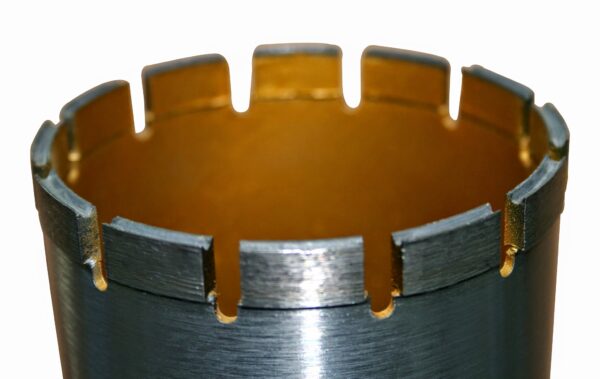
Diamond core drills are the preferred solution when accuracy, clean cuts, and efficiency matter. From construction professionals to manufacturers working with advanced materials, these tools have become essential for drilling precise holes in hard, brittle, or dense surfaces. Whether the application involves stone, concrete, glass, ceramics, or composites, diamond core drilling offers performance that traditional drilling methods simply cannot match.
This guide explores how diamond core drills work, where they are used, how to choose the right tool, and why they remain the gold standard for precision drilling across industries.
What Are Diamond Core Drills?
Diamond core drills are specialized drilling tools designed to create smooth, accurate holes by grinding rather than cutting. They use industrial-grade diamond particles bonded to the cutting edge of a cylindrical drill bit. Instead of pulverizing material, the diamond surface gradually removes it with minimal stress.
Unlike conventional twist drills, diamond core drill bits extract a solid cylindrical core from the material. This method reduces vibration, limits surface damage, and delivers superior hole quality—especially in hard or fragile substrates.
How Diamond Core Drilling Works
Diamond core drilling relies on abrasion rather than impact. As the drill rotates, the diamond segments grind through the material’s surface. Water or coolant is often used to:
Reduce heat buildup
Extend tool life
Flush debris from the cutting zone
Improve cut quality
This controlled process makes diamond drills ideal for materials that crack, chip, or fracture under traditional drilling pressure.
Key Applications of Diamond Core Drills
Diamond core drills are widely used across multiple industries due to their versatility and precision.
Construction and Infrastructure
In construction, diamond core drilling is essential for creating clean openings for plumbing, electrical conduits, HVAC systems, and anchoring solutions. Concrete, reinforced concrete, brick, and masonry are all drilled efficiently without compromising structural integrity.
Stone and Tile Fabrication
Stone fabricators rely on diamond core drill bits to produce accurate holes in granite, marble, quartz, and porcelain tiles. The clean edges reduce finishing time and prevent costly material waste.
Glass and Ceramics
Glass and ceramic materials require careful handling. Diamond drills allow for precise holes without shattering or micro-cracking, making them ideal for architectural glass, laboratory equipment, and decorative installations.
Aerospace and Advanced Manufacturing
Composite materials, carbon fiber, and engineered ceramics demand exact tolerances. Diamond core drills support precision manufacturing by delivering consistent results with minimal delamination.
Benefits of Using Diamond Core Drill Bits
Using diamond core drill bits offers several advantages over conventional drilling tools:
Exceptional precision with smooth hole finishes
Minimal material damage, even on brittle surfaces
Long tool life when properly cooled and maintained
Reduced vibration and noise during operation
High efficiency for repetitive or large-diameter drilling
These benefits translate into better productivity, lower rework rates, and improved overall project quality.
Types of Diamond Core Drills
Choosing the right diamond drill depends on the application, material, and equipment.
Wet Diamond Core Drills
Wet drilling uses water or coolant to control heat and dust. This method is ideal for heavy-duty applications and harder materials such as reinforced concrete and stone.
Dry Diamond Core Drills
Dry diamond drills are designed for situations where water is impractical. Advanced bonding technologies allow these drills to manage heat while still delivering clean results.
Handheld vs. Rig-Mounted Drills
Handheld diamond drills are portable and suitable for light to medium tasks
Rig-mounted core drills provide stability and precision for large-diameter or deep drilling
How to Choose the Right Diamond Core Drill
Selecting the correct diamond core drill bit ensures optimal performance and longevity.
Consider the Material
Different materials require specific diamond bond hardness. Softer bonds are used for harder materials, while harder bonds suit softer substrates.
Hole Diameter and Depth
Ensure the drill size matches the required hole diameter and depth. Using the wrong size can cause overheating or premature wear.
Machine Compatibility
Check that the drill bit matches the spindle size, speed range, and power output of your drilling equipment.
Cooling Method
Determine whether wet or dry drilling is appropriate based on job site conditions and material sensitivity.
Manufacturers like UKAM Industrial Superhard Tools design diamond core drills to meet demanding industrial standards, ensuring consistent performance across specialized applications.
Best Practices for Diamond Core Drilling
To maximize results and tool lifespan:
Start drilling at low speed to establish accuracy
Maintain steady pressure—avoid forcing the drill
Use adequate cooling when wet drilling
Allow the diamond segments to do the work
Clean and inspect drill bits regularly
Following these practices ensures smooth operation and extends the life of diamond drill tools.
Diamond Core Drills vs. Traditional Drills
Traditional drills rely on cutting edges that can struggle with dense or brittle materials. In contrast, diamond core drills provide:
Greater accuracy
Cleaner holes
Lower risk of cracking or chipping
Improved efficiency on hard materials
For professional applications, diamond drilling is not just an upgrade—it’s a necessity.
Future of Diamond Core Drilling Technology
Advancements in bonding technology, synthetic diamond quality, and tool design continue to improve performance. Modern diamond drills now offer faster cutting speeds, longer service life, and improved compatibility with automated and CNC drilling systems.
Industries increasingly rely on precision drilling, making diamond core drills a long-term investment rather than a niche tool.
Frequently Asked Questions
What materials can diamond core drills be used on?
Diamond core drills work on concrete, stone, glass, ceramics, tiles, composites, and many engineered materials.
Do diamond core drill bits need water?
Not always. Wet drilling is common for heavy-duty tasks, but dry diamond core drills are available for applications where water cannot be used.
How long do diamond core drill bits last?
Lifespan depends on material hardness, drilling technique, cooling, and bond quality. Proper use significantly extends tool life.
Can diamond drills be used with standard drills?
Some small diamond drill bits can be used with handheld drills, but larger core drills require dedicated machines or rigs.
Why are diamond core drills more expensive?
They use industrial-grade diamonds and advanced bonding technology, offering superior performance, accuracy, and durability compared to conventional drills.
Final Thoughts
Diamond core drills have transformed the way professionals approach precision drilling. Their ability to handle hard, delicate, and high-value materials with accuracy makes them indispensable across industries. By choosing the right diamond core drill bits and following best practices, users achieve cleaner results, greater efficiency, and long-term cost savings.
Whether in construction, fabrication, or advanced manufacturing, diamond drilling remains the benchmark for precision and reliability—trusted by professionals worldwide, including solutions developed by UKAM for demanding industrial needs.