
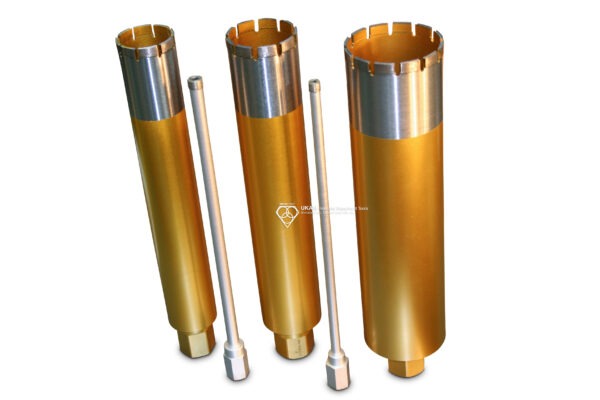
Diamond core drill bits are essential tools in industries where precision, durability, and efficiency matter most. From construction and infrastructure to aerospace, electronics, and advanced manufacturing, these tools enable clean, accurate drilling in some of the hardest materials known. As materials evolve and tolerances become tighter, the demand for high-performance diamond drilling solutions continues to grow.This guide explores how diamond core drill bits work, where they are used, what makes them different from conventional drill bits, and how to choose the right one for your application.
What Are Diamond Core Drill Bits?
Diamond core drill bits are hollow cylindrical cutting tools embedded with industrial diamonds. Unlike traditional twist drills, they remove material by grinding rather than cutting, allowing them to penetrate extremely hard or brittle surfaces with minimal chipping or cracking.The hollow core design reduces heat buildup, improves debris removal, and allows for deeper, more precise drilling. This makes diamond core drill bits ideal for applications requiring clean holes, tight tolerances, and consistent performance.
Materials Diamond Core Drill Bits Can Drill
One of the defining advantages of diamond core drill bits is their versatility across a wide range of hard and engineered materials:
- Concrete and reinforced concrete
- Granite, marble, and natural stone
- Ceramic and porcelain tiles
- Glass and quartz
- Carbide and technical ceramics
- Composites and advanced engineered materials
Because diamonds are the hardest known material, these drill bits maintain cutting efficiency where standard carbide or steel tools fail.
How Diamond Core Drill Bits Work
Instead of shearing material, diamond core drill bits grind away the surface using diamond abrasives bonded to the cutting edge. This process results in:
- Reduced vibration
- Lower risk of microfractures
- Smoother hole walls
- Higher dimensional accuracy
Coolant or water is often used to manage heat, extend tool life, and remove debris during drilling, especially in continuous or high-precision operations.
Types of Diamond Core Drill Bits
Different applications require different bond types, diamond sizes, and tool configurations. Common categories include:
Wet Diamond Core Drill Bits
Designed for use with water or coolant, these are ideal for concrete, stone, and high-heat applications. They offer longer tool life and cleaner results.
Dry Diamond Core Drill Bits
Used where water is impractical, these bits are optimized for airflow and heat dissipation, commonly used in construction and renovation work.
Electroplated Diamond Core Drill Bits
These feature a single layer of exposed diamonds for aggressive cutting and high precision, often used in glass, ceramics, and composites.
Sintered Diamond Core Drill Bits
Manufactured with diamonds distributed throughout the bond matrix, these bits offer longer life and consistent performance in production environments.
Key Advantages of Diamond Core Drill Bits
Diamond core drill bits offer several performance advantages that make them indispensable in professional settings:
- Exceptional hardness for drilling tough materials
- High precision with minimal surface damage
- Longer tool life compared to conventional bits
- Cleaner holes with reduced finishing requirements
- Improved efficiency in both manual and automated systems
These benefits translate directly into lower operating costs and higher productivity over time.
Applications Across Industries
Diamond core drill bits are used in a wide range of industries due to their adaptability and reliability.
Construction and Infrastructure
Used for drilling anchor holes, plumbing penetrations, and electrical pathways in concrete and masonry.
Stone and Tile Fabrication
Essential for creating clean holes in granite, marble, porcelain, and engineered stone without cracking or chipping.
Electronics and Semiconductors
Enable precise drilling in brittle substrates such as ceramics, quartz, and silicon-based materials.
Aerospace and Automotive
Used in advanced composites and hard alloys where precision and material integrity are critical.
Medical and Scientific Equipment
Support drilling of technical ceramics and specialty materials used in high-performance components.
Choosing the Right Diamond Core Drill Bit
Selecting the correct diamond core drill bit depends on several critical factors:
- Material hardness and composition
- Hole diameter and depth requirements
- Wet vs. dry drilling conditions
- Machine type and spindle speed
- Production volume and consistency needs
Using the wrong bond hardness or diamond concentration can reduce tool life or compromise hole quality. Matching the bit to the application ensures optimal results.
Best Practices for Optimal Performance
To maximize the lifespan and performance of diamond core drill bits:
- Use the recommended speed and feed rates
- Apply proper coolant or water flow when required
- Avoid excessive pressure that can glaze the diamonds
- Allow the diamonds to cut, not rub
- Regularly inspect the bit for wear or loading
Proper technique not only improves results but also protects both the tool and the workpiece.
Innovation and Manufacturing Quality
Modern diamond core drill bits are the result of advanced engineering, precise diamond placement, and controlled bonding processes. High-quality manufacturers invest heavily in research and development to optimize diamond exposure, bond wear, and thermal performance.Companies such as UKAM Industrial Superhard Tools have contributed to advancing diamond tooling technology by developing application-specific solutions for demanding industries.
Sustainability and Efficiency
Diamond core drill bits also support sustainable manufacturing goals. Their long service life reduces tool consumption, while cleaner drilling minimizes material waste and rework. Efficient cutting lowers energy usage and extends machine life, aligning with modern environmental and operational standards.
Frequently Asked Questions
What makes diamond core drill bits different from regular drill bits?
Diamond core drill bits grind material using industrial diamonds, allowing them to drill much harder surfaces with greater precision and less damage.
Can diamond core drill bits be used on reinforced concrete?
Yes, many diamond core drill bits are specifically designed to handle reinforced concrete, including steel rebar, when used with proper equipment and coolant.
Do diamond core drill bits require water?
Some do. Wet drilling improves cooling and tool life, but dry diamond core drill bits are available for applications where water is not practical.
How long do diamond core drill bits last?
Tool life depends on material hardness, drilling conditions, and bond quality. High-quality bits can last significantly longer than conventional alternatives.
Are diamond core drill bits suitable for precision manufacturing?
Yes. They are widely used in electronics, aerospace, and medical manufacturing due to their accuracy and clean cutting performance.
Final Thoughts
Diamond core drill bits have become a cornerstone of modern drilling technology. Their ability to deliver precision, durability, and efficiency across a wide range of materials makes them invaluable in today’s high-performance industries. As materials continue to evolve, diamond drilling solutions will remain at the forefront of innovation, enabling cleaner cuts, tighter tolerances, and more reliable results.Whether for construction, advanced manufacturing, or specialized engineering, choosing the right diamond core drill bit is an investment in accuracy, productivity, and long-term performance.